Category: Uncategorized

  • Drought relief and hailstorm relief  work

    Drought relief and hailstorm relief work

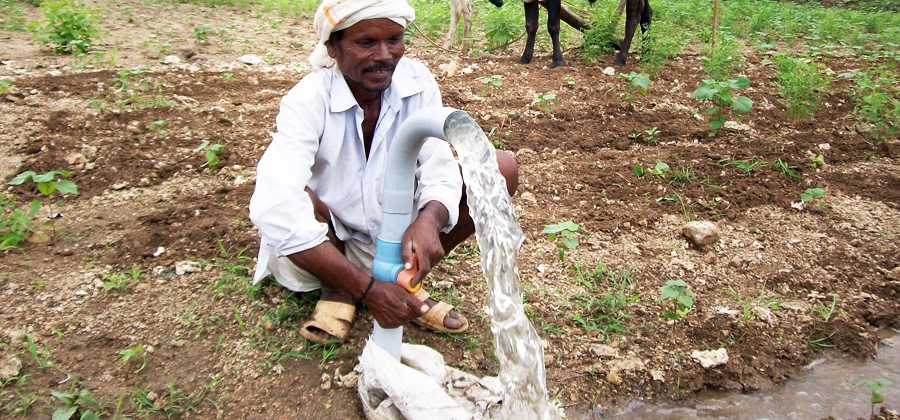
    The reasons for farmer’s distress are varied in which the manmade is, very sluggish implementation of government policies and schemes since, it is beyond the reach of farmers to create infrastructural facilities. The major reasons for grievances’ of farmers is mainly the dependency on nature, if the nature is unkind the entire population would be un-happy. The drought occurred since the onset of monsoon has made the situation of farmers more pitiable.The farmers had to face constant dry-spells during rainy season; therefore, the sowing was spoiled and even has to sow seeds twice and thrice. The CF has given helping hand to the farmers in Vidarbha and Marathwada regions for second and third time of sowing in this very critical condition.

    S.No Activity Number of beneficiaries covered Total
    Dilasa SSM SVS GSMT VGSS AHS
    1 Supply of Seed and Fertilizers 215 1250 280 526 768 283 3322
    2 Supply of food kits 1066 0 150 127 0 125 1468
    3 Supply of vegetables 130 0 0 0 0 0 130
    4 Supply of drinking water 90 0 0 0 0 0 90
    5 Supply of Kitchen garden seed to Adolescents 0 0 89 0 0 0 89
    6 Supply of fodder 45 0 0 0 0 0 45
    7 Doha Model 200 0 0 0 0 0 200
    Total 1746 1250 519 653 768 402 5344

    During the season 2014-15, 40,000 tractor trolley’s of silt has been removed from four reservoirs which will increase storage capacity by 15 Crores litres and excavated silt has been spread in 615 acres of land for enriching the soil. The de-siltation work has been carried out from the tanks in three villages of Vidarbha and Marathwada regions, removed 35000 trolleys of silt.

    Hailstorm Relief:
    The hailstorm has devastated standing crops, houses and the cattle wealth very badly in many villages of Marathwada and Vidarbha Regions. Under the circumstances the affected families were badly in need of relief at various levels.
    Dilasa conducted survey of losses occurred due to hailstorm through networking partners and approached to Caring friends, Mumbai and also to Sir Dorabji Tata Trust, Mumbai, for seeking support to provide comfort to the affected families. Under support of Caring Friends Mumbai Pani Panchayat, Gramin Vikas Bahuuddeshiya Sanstha, Vikasganga, Nav-Vidhya, Dinbandhu, Aniket Bahuuddeshiya, Sanjivani Bahuuddeshiya, Dnyandeep, Sarita, Sahyog Rural Science Society, Samaj Vikas, Shri Pavan Mishra group and Dr. Avinash Pol group have carried out relief activities in their respective operational areas. Total 71 villages from 23 blocks of 10 districts of Vidarbha, Marathwda and west Maharashtra were covered under the relief project. Total 2334 affected families were provided with relief support. Under support of Sir Dorabji Tata Trust the relief activities carried out in both the initiatives are farm preparation for next season, housing shed, temporary shelter, roofing sheets, seed supply, supply of food kits and educational material for children.

    S.No Name of Activity No of beneficiaries
    Sanctioned units Completed till 31 st May 2014
    1 Support for farm preparation for the next season 450 350
    2 Support for housing- sheds, temporary shelters, roofing sheets 840 450
    3 Distribution of chicken and goats 400 0
    4 Seed distribution 50 0
    5 Food material distribution 350 50
    6 Education Material for children affected 230 0
  • Child development

    Child development

    Hasre Gharkul:
    At present 34 boys and girls between the age group of 6 to 20 resides in the Hasre Gharkul centre, Pusad. Sant Gajanan Maharaj Sansthan, Trust Shegaon is extending support to this Centre, since last five years. The children in the Centre are being provided with food and accommodation facilities, medical aid, clothes and dresses, coaching in subjects like English, Mathematics, exposures and picnic, teaching aids and all relevant support for education and training. The elder children who are either undergoing training or otherwise areas below:

    • Seven of the matured girls have got married
    • Seven of the adolescents are undergoing skill training in Pune
    • Three of the youths are undergoing skill training at Mumbai and other places
    • The children boys and girls between 6 to 20 of age are learning in various standard in Pusad

    Farmer’s Support Centre:
    This support centre is exclusively running under guidance and support of Caring Friends Mumbai. Numerous studies have been made of the causes of farmers’ suicides, including a comprehensive one by the National Commission on Farmers. The most important cause is the un-remunerative nature of farming resulting in chronic indebtedness. The widows of the farmers, who have committed suicide, are predominantly young. The most important assets of the women in distress are their children and land. The children must be educated and the land should yield them sustained income. Women suffer from a multiple burden on their time, due to home keeping, child rearing and income earning activities. The challenge lies in enabling them to derive benefit from the invaluable asset of land.

    In order to assist women farmers to take to economically sustainable farming and also to support the distressed farmers the farmers Support Centre has been established. Farmers Support centre is the concern of Caring Friends and accordingly the activities carried out for helping distressed farmers, widows of deceased farmers and the children.

    • Under NAREGA the labours were given employment
    • Support extended for sericulture production
    • Support extended for purchase of food grains under PDS
    • Supplied bicycles and teaching aids to the wards of widows and poor farmers
    • More Than 15000 famine stricken farmers got relief support from Dilasa during last two years through networking partner organizations.
    • Extended support to 238 deceased farmer families; provided with ration kits, Bicycle for their wards, Bullock pairs, Cows, Motor pump-set, PVC pipes, Crop inputs etc.
    • Revolving fund of Rs.53.00 lacs has been provided to 643 farmers in the form of crop inputs and support for Income Generation Activities.
  • Women development

    Women development

    The Self-Help Groups (SHG) are the basic institutions in the villages. The SHGs, made up exclusively of women, have developed numerous tools such as micro-credit, and community funds. Each SHG has a maximum of 20 women. Today, Dilasa and its 11 partners are working with 7000 SHGs, with a total membership of 84000. The partner being legal entities negotiate and have contracts with government departments, banks and other outside entities. The SHG’s involved have been imparted skill training and now nearly 100 SHG’s are engaged in running income generation activities like garment manufacturing, Goat rearing, rearing of milch cattle, vegetable vending, grocery shop, stationery and daily needs.

    Outreach of micro finance programme:
    Covered 7000 SHG’s and 84000 women members from 11 networking NGOs in seven districts of Vidarbha and Marathwada, credit linked 1600 Self Help Groups, received credit of Rs. 46.00 Crores benefitting 46316 members.

    Income Generation Activities being run by women SHG members:
    SHG’s are being imparted skill training on garment designing, sewing and stitching, Embroidery, Saree work and beauty parlour along with rearing of milch cattle. Two of the widows from Digras block have started rearing of milch cattle through which they have strengthened their livelihood. The women in the same block have started dresses designing,stitching and selling them in market. In Yavatmal district the women SHG members have started hotel, Grocery shop, vegetable vendor shop etc.

  • Livelihood Development

    Livelihood Development

    Mobilization of people against water crisis:
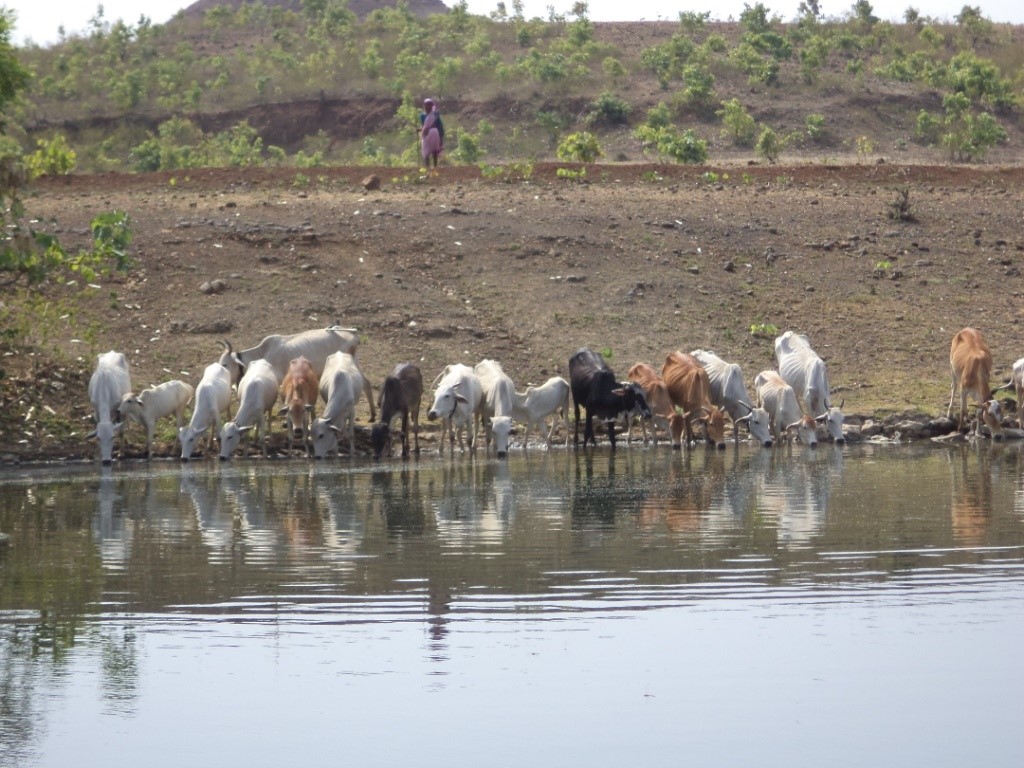
    The human being, animals wild as well as domestic and the birds are facing water crisis consecutively since last three years due to erratic rainfall and more or less the problem persist all over. People in general are aware about the source of water that is rain water but lacking idea about collecting and impounding it to be used in water scare situation. On the other hand there is no control over use of available water therefore, it leads to misuse. Water crisis has became an intense issue these days and hence it needs deliberately mobilizing people, devising plan with them, shouldering responsibilities to them for harvesting rain water, moderate use for domestic purposes and equitable distribution for irrigation purpose.

    Soil and Water conservation:
    Integrated natural resource management comprises the planned, coordinated and sustainable use of water resources, agriculture resources, grazing lands and forests.Assured water supplies results increased crop yield providing the basis for the achievement of food security and poverty reduction. In order to protect people and nature, it is imperative to step up the promotion of adaptation measures. Hence in order to achieve sustainable development, water shed management has to be considered an integral part of adaptation to climate change.

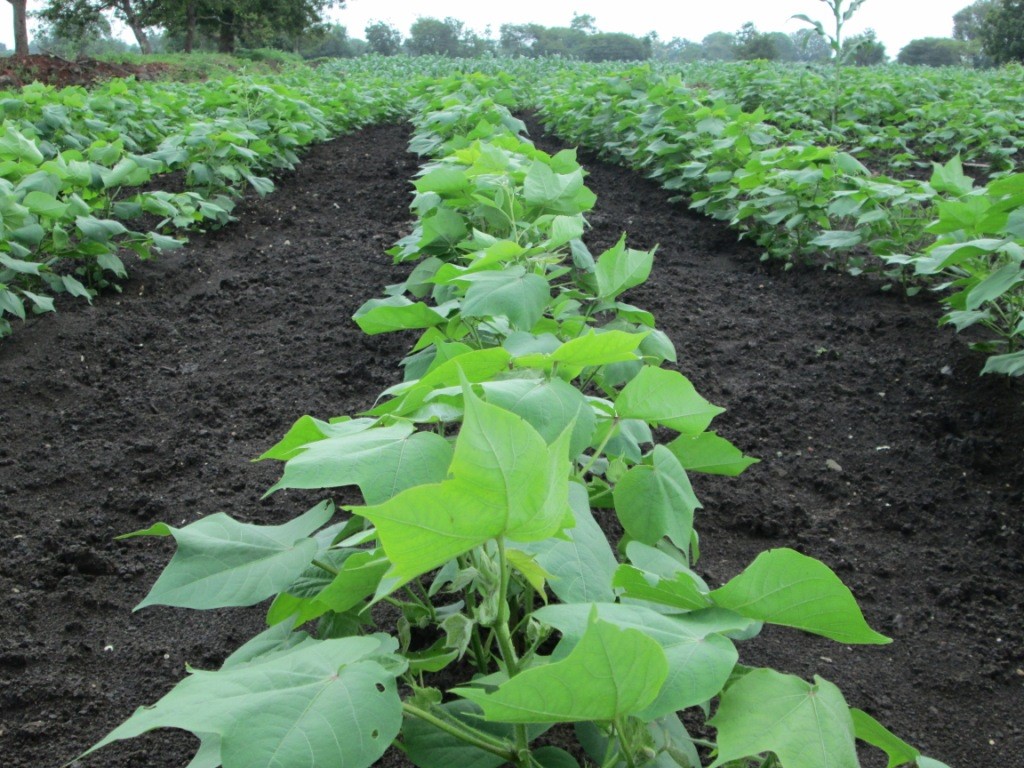
    Watershed treatments have been carried out in 11000 ha of land under support of NABARD, Agakhan Foundation, Caring Friends, SRTT and DST projects benefiting over 5500 farmers. Due to the land treatment work water retention capacity of treated land has been enhanced tremendously. Eighteen villages have been covered under this activity through which cotton crop production has been reached to four quintals which is double than the earlier.

    Rain water harvesting:
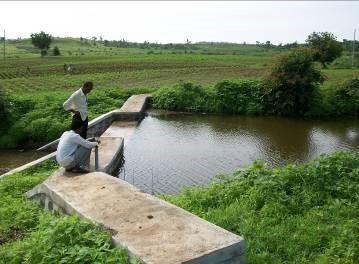
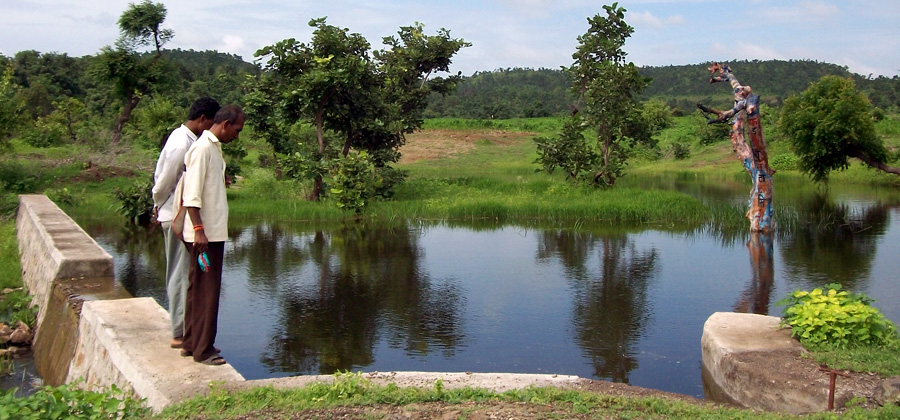
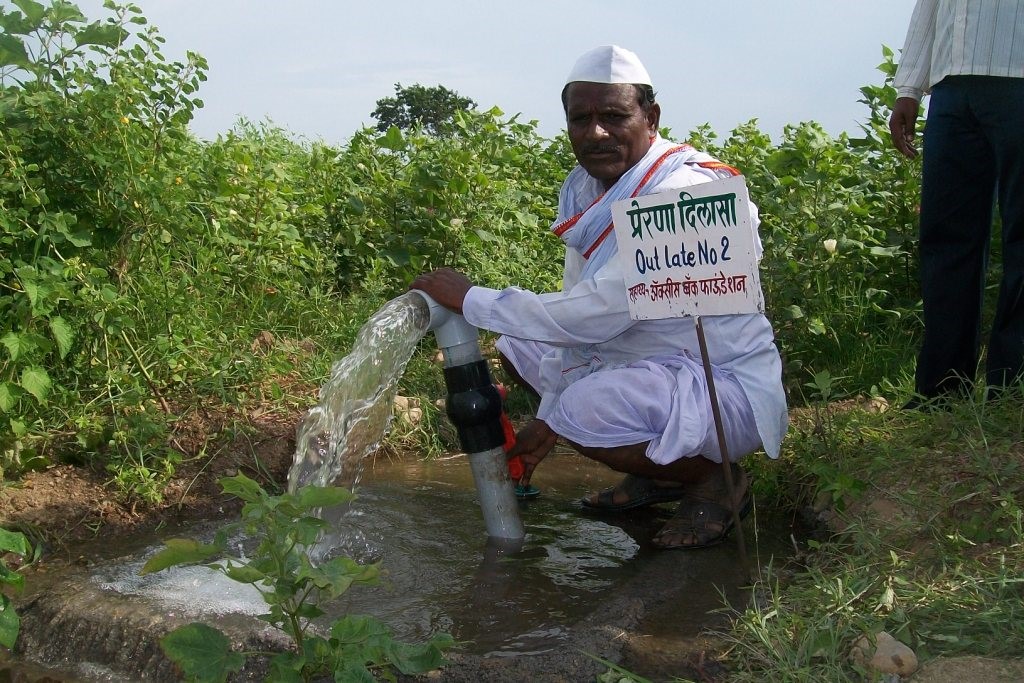
    Integrated water resource management will continue to be an adaptation strategy for people living with rainfall variability, both for domestic supply and to enhance crop, livestock and other forms of agriculture. As the organization is situated in drought prone area of Maharashtra, it has been constructing rain water harvesting structures and mobilizing village communities to work for natural resource conservation. Farm pits have been constructed at the slope of the farm land of individual farmer. Phad Irrigation and Doha models are the location specific structures constructed at places suitable for developing such structures. The effects are visible in terms of recharging of wells and aquifers, increased bio-mass productivity and significant increase in agriculture production, reduction in women’s drudgery. Due to high fodder availability, villagers have also benefited from selling milk products through an informal dairy arrangement. The structures developed under support of Axis Bank Foundation project, Jamsetji Tata Trust, Navajbai Ratan Tata Trust and Caring Friends are detailed below.

    • Doha Model:
      Total 300 numbers of Doha Models have been developed in distress areas of seven districts of Vidharbha and Marathwada benefitting 4280 numbers of farmers by transforming 10700 acres of rain-fed agriculture land into irrigation land.
    • Diversion Based Irrigation System:
      Total 252 numbers of Phad Systems have been developed in five districts of Vidharbha covering 11718 acres of dry-land that brought under irrigation and benefitting 3906 farming families.
    • Recharge Pit:
      Total 511 numbers of recharge pits have been constructed at the farms of same numbers of farmers in Yavatmal district through which 1278 acres of dry-land could be given protective irrigation especially for cotton, pigeon-pea and soybean crops. Depth of the recharge pit is nine feet. Two percent out of total farmers have further sunken the pit to be developed as well that struck water. The harvested rain water coupled with spring water has been used for protective irrigation.
    • Bodi Phad:
      316 numbers of Bodi Phad structures have been developed through which 948 households could be benefitted by bringing 3792 acres of dry land agriculture under irrigation. This activity has specially been focused on rice belt in Gadchiroli district which is Naxal afflicted area.

    PATA Method:
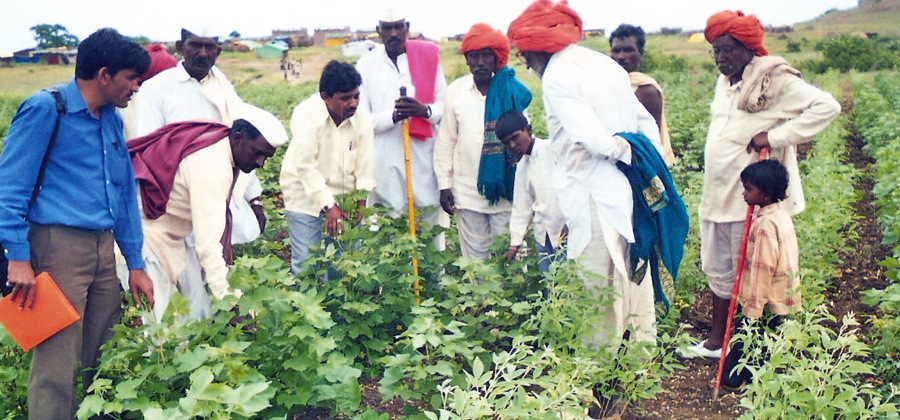
    Traditionally, ‘Pata’ method of vegetable cultivation to meet the nutritional needs of the family was adopted on a large scale by the farmers and it was actually in the domain of the women. In this method, various crops comprising vegetables, pulses and crops of other values were used to be sown together in three rows in the farm. With the adoption of monoculture with the advent of green revolution, this practice was stopped to make room for so called more remunerative cash crops. Dilasa has now reinstated this traditional practice and promoted farmers to sow various kinds of vegetables. This has enabled availability of legumes to the farming families for self consumption in order to get better healthy food comprising of vagaries of nutritional elements. As a result of our efforts, more than 3 lakhs of farmers adopted the pata method of cultivation. Various crops like Pearl millet, Maize, Sorghum, Black gram, Green gram, Lady’s finger, Guar, Cow pea were planted together in successive rows.

    Integrated Pest Management:
    The IPM techniques were imparted to the farmers in 10 villages of Ghatanji and Zari blocks of Yavatmal district. The techniques of agriculture practices have been changed in the green revolution in which hybrid seeds, chemical fertilizers and insecticides have been promoted. Unbalanced use of chemical fertilizers, insecticides is being made in the lust of more production. This has helped in deterioration of health of soil and gradually becoming infertile.Following techniques have been assimilated by farmers for improving crop productivity.

    • Intercropping and mix cropping pattern as Cotton+Soybean, Cotton+Pigeon-pea
    • Fertilizer management, pest management, disease prevention and seed processing
    • Bio-mass management and preparation and use of organic manure for improving soil health
    • The process of taking soil sample and getting the soil samples tested
    • Importance of alteration of crops, practicing mixed cropping and inter-cropping for productivity enhancement
    • The PKV has recommended use of N.P.K.
    • To identify the friendly insects and also the sucking pest
    • Knowledge about weed management and water and soil management
    • Introduced with the techniques of Soil and Water Conservation and Rain water Harvesting
    • Understood what the net gain shall mean
  • Phad Technology

    Phad Technology

    The percolation tank has been developed by government in the forest area near Dhangarwadi in which the rainwater is harvested. The seepage of the tank turned in to small drains which have around 10 HP flow. The flowing water of the drains was checked by constructing diversion weir across the drains and diverted this flow in the nearby farm for protective irrigation of Kharif and Rabbi Crops. Two such models have been developed under the project through which 109 acres of dry land transformed into irrigated land. The Dhangar’s have purchased 200 acres of farm land in this region till today. Nursery and primary schools are now running here for their children. Drinking water is available amply.

  • PATA Method

    PATA Method

    Traditionally, ‘Pata’ method of vegetable cultivation to meet the nutritional needs of the family was adopted on a large scale by the farmers and it was actually in the domain of the women. In this method, various crops comprising vegetables, pulses and crops of other values were used to be sown together in three rows in the farm. With the adoption of monoculture with the advent of green revolution, this practice was stopped to make room for so called more remunerative cash crops. Dilasa has now reinstated this traditional practice and promoted farmers to sow various kinds of vegetables. This has enabled availability of legumes to the farming families for self consumption in order to get better healthy food comprising of vagaries of nutritional elements. As a result of our efforts, more than 3 lakhs of farmers adopted the pata method of cultivation. Various crops like Pearl millet, Maize, Sorghum, Black gram, Green gram, Lady’s finger, Guar, Cow pea were planted together in successive rows.

  • Soil & Water Conservation

    Soil & Water Conservation

    Integrated natural resource management comprises the planned, coordinated and sustainable use of water resources, agriculture resources, grazing lands and forests. Assured water supplies results increased crop yield providing the basis for the achievement of food security and poverty reduction. In order to protect people and nature, it is imperative to step up the promotion of adaptation measures. Hence in order to achieve sustainable development, water shed management has to be considered an integral part of adaptation to climate change.

    Watershed treatments have been carried out in 11000 ha of land under support of NABARD, Agakhan Foundation, Caring Friends, SRTT and DST projects benefiting over 5500 farmers. Due to the land treatment work water retention capacity of treated land has been enhanced tremendously. Eighteen villages have been covered under this activity through which cotton crop production has been reached to four quintals which is double than the earlier.

  • Women Development

    Women Development

    The Self-Help Groups (SHG) are the basic institutions in the villages. The SHGs, made up exclusively of women, have developed numerous tools such as micro-credit, and community funds. Each SHG has a maximum of 20 women. Today, Dilasa and its 11 partners are working with 7000 SHGs, with a total membership of 84000. The partner being legal entities negotiate and have contracts with government departments, banks and other outside entities. The SHG’s involved have been imparted skill training and now nearly 100 SHG’s are engaged in running income generation activities like garment manufacturing, Goat rearing, rearing of milch cattle, vegetable vending, grocery shop, stationery and daily needs.
    Outreach of micro finance programme:
    Covered 7000 SHG’s and 84000 women members from 11 networking NGOs in seven districts of Vidarbha and Marathwada, credit linked 1600 Self Help Groups, received credit of Rs. 46.00 Crores benefitting 46316 members
    Income Generation Activities being run by women SHG members:
    SHG’s are being imparted skill training on garment designing, sewing and stitching, Embroidery, Saree work and beauty parlour along with rearing of milch cattle. Two of the widows from Digras block have started rearing of milch cattle through which they have strengthened their livelihood. The women in the same block have started dresses designing, stitching and selling them in market. In Yavatmal district the women SHG members have started hotel, Grocery shop, vegetable vendor shop etc.